Folk Bitch Trio share all the details of their Debut Album

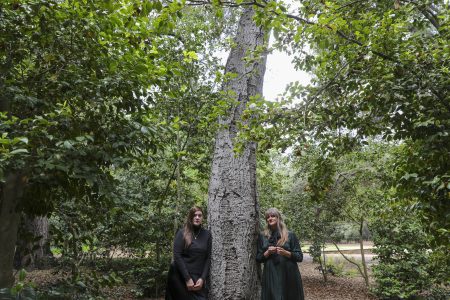
In the last decade alone, Australia has been producing some of the most exciting artists across a number of genres from Gang of Youths, Amyl and The Sniffers, Courtney Barnett and Julia Jacklin. With the impending release of their stunning debut album Now Would Be A Good Time, due July 25th via Jagjaguwar, Folk Bitch Trio make an excellent case to be included in the conversation of acts from Down Under rising to the top. Formed towards the end of 2019, Folk Bitch Trio is three best friends–Gracie Sinclair, Jeanie Pilkington and Heide Peverelle–whose delicate acoustic guitar-led arrangements heralds the mournful air of Julia Jacklin’s work and while also drawing inspiration from warm ‘70s records by CSNY, delivered with the Melbourne/Naarm-based groups heart-wrenchingly beautiful harmonies. Now Would Be A Good Time is engaging and enveloping, its atmosphere heightened by the band’s decision to record to tape; capturing the details of the room as they sang close together. Intimate, astute and remarkably assured in both their performance and lyrical output, Folk Bitch Trio have made a debut record with immense promise for a future filled with astonishing work.
Speaking over Zoom, Grace, Jeanie and Heide told Northern Transmissions about living with the songs featured on Now Would Be A Good Time for the last five years, developing their sound and the artists that have been inspiring them recently.
NT: When you were making your debut album, Now Would Be A Good Time, you chose to record to tape, which is a more challenging process. You were in the studio in the winter of 2024, and less than a year later, it’s going to be released. What did the weeks and months leading up to your studio time look like? Were you rehearsing a lot or did you go into it with the intention of seeing what you could capture in the moment?
Gracie Sinclair: They’re all songs that were already old, and we’d toured them across the world. So, going into the studio, that was the last of our worries. Irregardless of that, we’d heard about other bands, friends of ours, going into the studio with the bones of songs that were not fully arranged. That just seems crazy to us. When we go in for studio time, we go in and we do the job. We’re always so prepared. Because these songs were already done, it was just a matter of capturing them in the right way; not overdoing it and not making them sound too polished.
Jeanie Pilkington: Once we were on that road of capturing them well, it all came together very quickly. We worked with Tom [Healy] for the first time in May of last year, and then we went back less than two months later and did the nine remaining songs in a few weeks. With tape, you’re limited and you can’t just mess around in the studio for ages doing heaps of takes, because of that, iwe were able to work really fast. At the same time, though, it was also a five-year process of trial and error and figuring out how we wanted these songs to sound. That’s why we were able to pull it together so quickly; we found the right formula.
Heide Peverelle: Before we started tracking, we did some pre-production in New Zealand for a few days. We were there for a lot of the mixing process, as well. We trust Tom so much and we’d been there for the bulk of the process, but we told him to put, as he would call it, the candy on top of it. He worked his magic on the remainder of the tracks. It’s so satisfying letting him do his thing and then come back with loads of fun details in the songs. We noticed little things scattered throughout the songs, and it was so nice to hear.
NT: Recording to tape was an excellent decision because it brought an added warmth and intimacy to the recordings. “I’ll Find a Way”, in particular, comes to mind with regards to the care and treatment given to the songs. The vocals throughout are so stunning. Were there any first takes that feature on the album?
Gracie Sinclair: No! I mean, there were early or first takes that we’d like, but then we would do five, six or seven more takes. We’d listen to them all and say, ‘Ok, we got it right the first time.’ There were a few times where, with the first or second take, we’d be like, ‘That’s the one.’
Jeanie Pilkington: I think a lot of the time we knew, as well. For “Mary’s Playing The Harp,” we did that first take, and we probably all knew, but maybe weren’t willing to let that one go into the world because we knew how vulnerable and intense it was for all of us. But I believe, without trying to make us sound too good, if my memory serves me right “Mary’s Playing The Harp”, “Hotel TV” and “Moth Song” were all first takes.
Gracie Sinclair: Most of the rest of them, if they weren’t necessarily the first take, usually the bulk of them is a one-take. The vocals are live, our harmony is live. We’re all in the same room…
Heide Peverelle: Which is something we try to follow as a rule because it feels the best for us.
Jeanie Pilkington: We care a lot about the magic of the songs, which is a very mysterious thing and is hard to recreate when you’re in a clinical studio environment. Having each other in the room and having Tom Healy as a very sonically-minded presence put us at ease. That mixture of things and just having each other’s faces so close to each other at the mic helped recreate the magic.
Heide Peverelle: You gotta be close to the face!
NT: You formed towards the end of 2019, you mentioned that you’ve had these songs for a while. Obviously, in your first year or so as Folk Bitch Trio, playing live wasn’t possible with COVID-19 restrictions. Looking back on that time, do you feel that it was to your benefit because it meant that you could lock yourselves away to write and play together for a more concentrated period? Or, do you wish you could have had that experience of developing your style in a live setting?
Jeanie Pilkington: I don’t think we knew what to miss yet. We played around five shows by the time Melbourne went into a complete lockdown, where we couldn’t even hang out as friends. We had loved singing together, but it wasn’t our livelihood yet, as it would be now if that happened again. In some ways, I’m sure it was a blessing because we were really young when we started the band. We were 18. If we’d hit the ground running a little bit more, there would have been some potential there to have some things out there in the world that we’re not as proud of. Whereas, we’ve had this time to hone our craft before the world saw it. We could have pushed ourselves to make a record a few years ago, but I think we’re all glad we didn’t because these songs feel much more fully formed. We’re better songwriters, we’re better performers. In a way, having that part of the journey, of pausing for a bit, I guess we’ll never know what that did for our band, but it gave us some more time to grow before we did anything.
Gracie Sinclair: I’m also glad that we didn’t get put in the machine at that time. I trust our 19-year-old selves; we were all switched on smart, but I’m grateful that our first record and album cycle and touring is happening when we’re 23.
Heide Peverelle: It’s a lot. It’s a big thing to do, at any age. We have friends who released albums when they were 19, and they were fine and great and they enjoyed it. I just feel like we’re better equipped to deal with it all now.
NT: Five years is also a solid amount of time for you to capture your experiences–shared and individual-and build your sound for your debut album. You’ve lived with the songs for a long time and are at a different point in the band’s trajectory. What’s your relationship with the songs now? Do they motivate you to challenge yourself in your songwriting now?
Gracie Sinclair: I think our relationship with the songs now is probably mostly felt when we’re performing them live. We’re not going to listen to the record anymore! What we will notice, perhaps, when the album comes out, is that the audience will recognize all of the songs. That will be a whole new thing. IThe whole experience of releasing singles, getting picked up by a label, getting streamed, going to cities and people recognizing our songs has been incredible and so shocking to us. When people know the whole record, it will feel so good.
Jeanie Pilkington: It’s a really nice thing to be a band that has been playing live for a long time, and seeing people having favorites that aren’t even out yet. It’s amazing to have people see us live and then go back and look at our catalogue retrospectively and spend time with our music and listen to these recordings, because we are so proud of them. I feel at ease with them going out into the world because they’re represented correctly.
Heide Peverelle: We’ve spoken a lot about it recently about how once you release a song, it’s no longer yours. We’ve all had experiences and hold songs from other artists so dearly and have our own relationships with them. We’re excited for other people to feel that with our music. It’s quite a surreal thing for all of us.
NT: Musically, I could hear Julia Jacklin’s influence on your style and CSNY on “Cathode Ray.” I enjoyed how your influences were clear, but you still very much have your own identity anchoring the songs. What were your early discussions like surrounding your reference points and how you wanted to introduce your sensibilities within the songs?
Gracie Sinclair: I don’t think it was ever so considered.
Jeanie Pilkington: Yeah, we never sat down and said, ‘We want to sound like that band!’ I don’t think there is a band that was that band for us. It’s nice to hear that you feel that way about our music because it really is the truth. When we were in the studio, our references were so sprawling across genres and decades. CSNY was absolutely one. We were also referencing records that have come out in the last year and records that were recorded to tape in the ‘70s. We listen to a lot of old music and a lot of new music, and there isn’t any one band that we want to sound like except Folk Bitch Trio! We did reference ourselves a lot in the studio; that helped us get the sound.
Heide Peverelle: It sounds so funny referencing ourselves, but it’s true.
NT: You have to back yourself! How did you feel that you’ve evolved after the recording process? Do you feel as though you came through the experience, with the support of your bandmates, feeling stronger in your role within Folk Bitch Trio?
Gracie Sinclair: I think coming out of that hibernation period was a testament that we can do anything and it was incredibly enjoyable but it was also incredibly hard. We lived together, we didn’t have a break from each other for a single minute, and we were making the most important thing to us. Of course, we were having fun, but there was an element of pressure there. When we finished it, we came out with this feeling of like, ‘Oh my god, we can do anything because what the hell that we just do?!’ You have this love that comes from watching the people around you go through something difficult and seeing how they deal with it with such grace and strength and humor.
Jeanie Pilkington: I definitely think about the studio more when I’m writing a song now. That feels like a little bit of an evolution because in the past I was always just thinking about singing it live and, of course, that’s still the most important thing, but thinking about making a song that feels whole is definitely in the back of my mind a little bit more after spending so much time in the studio.
Heide Peverelle: Wow, I’ve not thought about that, that’s one for me to think about later! We’re best friends and we joke about it being a marriage between the three of us, but we all feel that we couldn’t do it without each other. We definitely wouldn’t want to do it without each other. These two are the closest people in my life; we’ve got family, partners and friends, but this experience of being in a band is very unique. That influences everything that we create.
NT: That togetherness comes across so clearly on the album. You mentioned that you were listening to albums from the 1970s and more recent releases, too. What have you been listening to at the moment?
Jeanie Pilkington: I’ve been listening to an old favorite of mine. I’ve been listening to a lot of Joanna Newsom. I love her. We’ve also been listening to the new Geese song.
Heide Peverelle: I’ve been listening to [Geese’s] album from 2023 a lot. Gracie suggested it ages ago, but I didn’t get around to it for a while. I must have heard Cameron Winter’s “Love Takes Miles” song, and thought, ‘Oh my god, this is amazing!’ I can’t stop listening to that Geese record and that Cameron Winter record.
Gracie Sinclair: I have been listening to a lot of Amyl and the Sniffers. I’m always listening to them, but I’ve been thinking about Amy’s lyrics in a very interesting way at the moment. I’ve also been listening to a lot of AC/DC.
Jeanie Pilkington: I’ve also been listening to a lot of the Yeah Yeah Yeahs over the last few weeks, as well. I’ve been getting into Karen O’s lyricism, and her vocal expression is unreal. She’s so emotive.
Gracie Sinclair: I’ve been thinking a lot about the modernization of lyrics. That’s something that I love in Amy’s writing; she’s able to capture this vernacular of the now. I was looking back at, say, listening to AC/DC lyrics, and that’s exactly what Bon Scott did; capture this vernacular of the people and put it into music. That’s how you modernize songwriting, that’s how songwriting changes. You notice it in thematic things people will talk about and things become stereotypical of a certain genre, like lyrical motifs or whatever, but I just think that that skill is so amazing. And Cameron Winter does that, too.
Heide Peverelle: Julia Jacklin and Courtney Barnett also did that and are doing that. They’re both from Australia and are Melbourne-based now. Having lots of great music come from our city is quite an inspiring thing. There are a lot of other acts that we love. There’s a band called Gut Health in Melbourne, and they’re doing that, similar to Amyl and The Sniffers. That’s a really eloquent way of putting it, Gracie, the modernizing of songwriting.
NT: Finally, it’s been such an exciting year for Folk Bitch Trio. Your debut album is coming out next week, and you have an amazing tour coming up. What are your hopes for the band for the remainder of 2025?
Jeanie Pilkington: We hope our album is a raging international success and that it takes us to bigger stages than we could ever dream! We like to think that whatever’s next for us, we haven’t verbally manifested yet. As far as the next six months go, we have heaps of shows all around the world and that in itself is so exciting to us. We have the immense privilege of always having something to look forward and we can’t wait for the album to be out and for people to spend time with this music and listen to it while they’re in the car or going for a walk. Also, it being a physical legacy and something that’s going to exist forever is amazing.
Pre-order Now Would Be a Good Time by Folk Bitch Trio HERE
Latest Reviews


Tracks
Advertisement
Join the Northern Transmissions insiders list
Sign up for reviews, interviews, news, videos, playlists — and more.