Tom Beaujour and Rich Bienstock on the Mayhem, Legacy, and the Cultural Impact of Lollapalooza
“Lollapalooza didn’t just tell the story of a festival—it tells the story of the rise and plateau of alternative culture in the ‘90s.” — Richard Bienstock
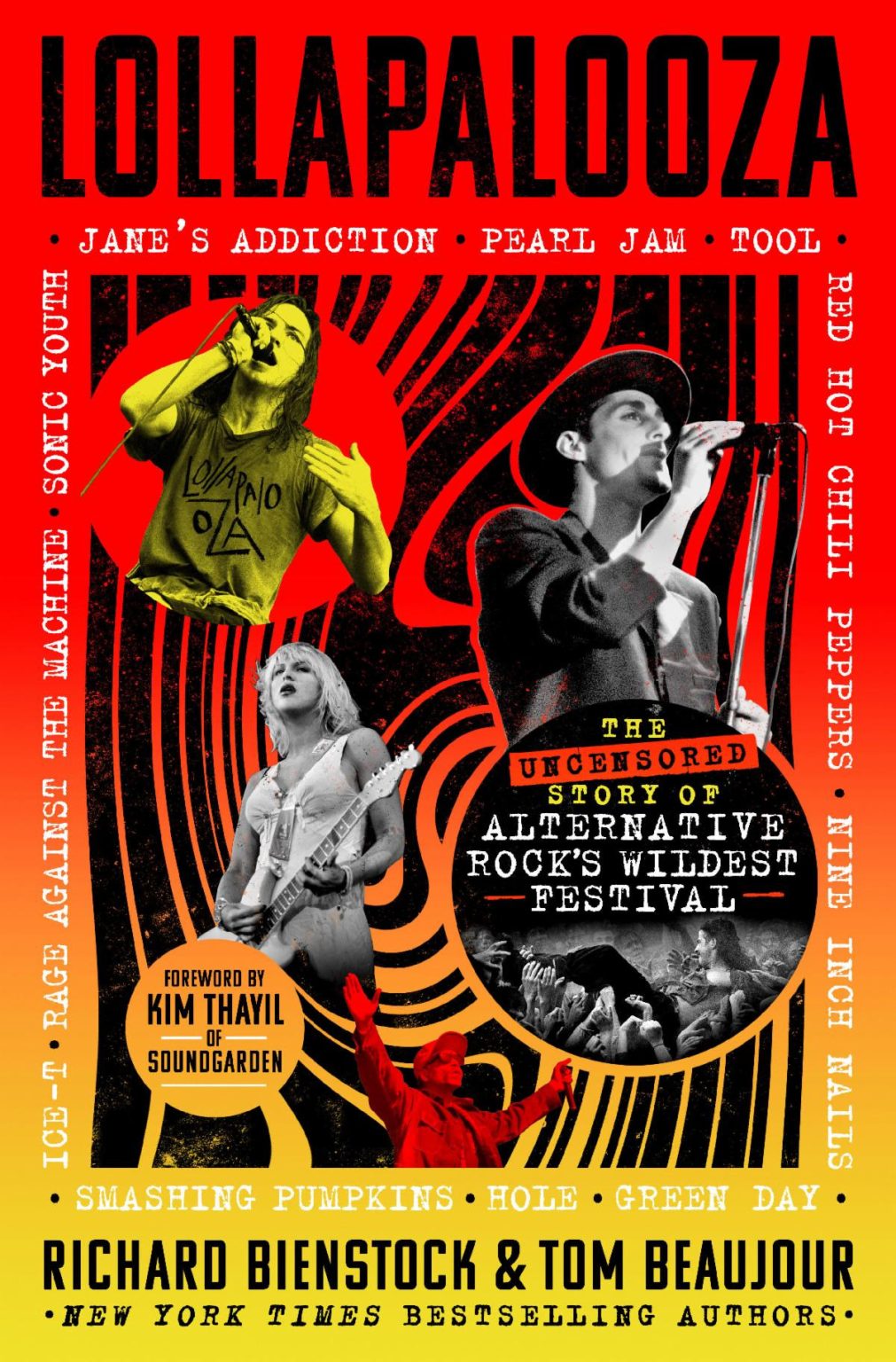
Recently, we sat down with New York Time Best Selling Authors Richard Bienstock and Tom Beaujour, about their new book, Lollapalooza: The Uncensored Story of Alternative Rock’s Wildest Festival, an oral history of the famous 90s festival, composed of over 200 original interviews. With discussions with names like Pearl Jam, Soundgarden, Nine Inch Nails, Jane’s Addiction, Rage Against the Machine, Metallica, and many, many more, Beaujour and Bienstock get to the core of some of the craziest stories of an iconic festival that originated as a farewell tour for Jane’s Addiction. They explore the impact it had not just on exposing the youth to political activism and varieties of cultures and backgrounds but also on breaking genre barriers and changing the course of alternative music for the future.
Already well-versed in co-writing, Lollapalooza marks Tom Beaujour and Rich Bienstock’s second collaboration, following their New York Times bestselling book-turned-docuseries Nöthin’ But a Good Time: The Uncensored History of the ‘80s Hard Rock Explosion. Spanning nearly 432 pages, Lollapalooza took just under two years to complete, driven by tireless work tracking down artists and securing hours of interviews with musicians across the alternative rock spectrum who attended Lollapalooza from ’91 to ’97.
Lollapalooza: The Uncensored Story of Alternative Rock’s Wildest Festival is available now.
Northern Transmissions: What draws you to writing these big, sprawling oral histories?
Tom Beaujour: The first time we did it for the glam metal book, Nöthin’ But a Good Time, we weren’t sure what format to take. But our agent said, “You’re doing an oral history, right?” And he was totally right. With Lollapalooza, a lot happens—but also nothing happens. It’s people on these long summer tours, playing for 50 minutes a day, and then just killing time. So what’s interesting are the small, weird stories—like Pavement being ping-pong champs or Guided by Voices beating the Beastie Boys at basketball. You couldn’t include all that in a traditional narrative.
Northern Transmissions: How long did the book take?
Rich Bienstock: A little under two years, which is quick considering we did over 200 interviews. It kind of picks up where the last book ends—grunge takes over, glam fades out, and alternative explodes.
Northern Transmissions: Were there any moments during the process where it felt like it might fall apart?
Tom Beaujour: Oh yeah. There was a summer where I thought, we’re not going to be able to finish. There were people we just couldn’t get. We blew our deadline by six months. Famous musicians are busy, and you’re asking for an hour when they’re not even promoting anything. But once you can say, “We’ve got Maynard from Tool, Tom Morello, Al Jourgensen,” it gets easier. People start to trust the project.
Northern Transmissions: Was there a particular story that completely surprised you?
Tom Beaujour: How close Nirvana came to headlining in 1994. That was news to me. Their production was being designed, other bands had signed on because Nirvana was doing it—and then it didn’t happen.
Rich Bienstock: Nine Inch Nails’ gear melted down in the sun. They trashed everything and walked offstage ten minutes into their set. And then Jane’s Addiction literally had a brawl on stage between Perry Farrell and Dave Navarro. That was night one.
Northern Transmissions: That sounds like a rough start.
Rich Bienstock: It really was, like—is this thing even going to make it to day two?
Northern Transmissions: Were there artists who refused to talk to you?
Tom Beaujour: A few. Beastie Boys didn’t want to talk. Nick Cave didn’t. Jay Mascis, I think, had a terrible time and wasn’t interested. But some of the most entertaining interviews came from people who had horrible experiences—like Pavement, or the guys in James, who got booed every night opening for Korn.
Rich Bienstock: Yeah, people were really funny about it in hindsight. The Jesus and Mary Chain were brutalized every night, and they had a sense of humor about it 30 years later.
Northern Transmissions: Was there an interview that really stuck with you?
Tom Beaujour: The Patti Smith one. I didn’t even realize I had missed her voicemail—she had left me a message and it sat in my inbox for eight days. I was scrolling and I saw it: “Hey, this is Patti Smith calling about your book.” I freaked out. I thought I’d ruined the whole thing. But we got on the phone and I asked her about her ’95 show, and she just started talking. It was her first time playing with a band in a decade, right after her husband died. Jeff Buckley was there. She talked for 20 minutes straight. I didn’t interrupt. That whole story became a full chapter. Same with Dave Navarro—he told this story about overdosing in London the night before Reading Festival. I didn’t even know it had happened. I just asked, “Do you remember that gig?” and he opened up. That’s the magic of it—you catch people in the right mood.
Northern Transmissions: Did the vibe of the festival change over the years?
Rich Bienstock: Definitely. By 1995, it was more indie, and the tour didn’t do great. So they pivoted and booked Metallica in ’96. Some thought that kept the spirit alive by being unexpected, but Perry Farrell quit over it. He thought it was a sellout move. It probably hurt the brand.
Northern Transmissions: What kind of bands thrived in that Lollapalooza environment?
Rich Bienstock: The heavy ones. Jane’s Addiction, Soundgarden, Rage, Tool. Bands with big riffs. Even though it was “alternative,” the ones that did best were basically hard rock bands. Bands like Pavement or Jesus and Mary Chain just didn’t land—especially when you’re going on after Pearl Jam.
Northern Transmissions: Were there any lighter, more fun moments?
Rich Bienstock: Definitely. Guided by Voices were drunk all the time, playing basketball with other bands backstage. Those interactions between artists were some of my favorite parts—like when you see them bonding, not just performing.
Tom Beaujour: A lot of it was downtime. Sitting in dusty fields for 23 hours waiting to play. That’s when people lose their minds—or just find ways to goof off. It’s chaotic and boring at the same time.
Northern Transmissions: How did Lollapalooza influence what came after?
Rich Bienstock: It changed everything. It proved you could have a touring festival in America with a diverse lineup and a cultural point of view. It laid the foundation for Warped Tour, Lilith Fair, Ozzfest—all of it. And it wasn’t just the music. It was political booths, poetry slams, weird food, tattoos, hemp bracelets. Stuff we now take for granted at festivals.
Tom Beaujour: The thing about Lollapalooza is you were going to be exposed to things you hadn’t seen before, in a safe space. That was Perry’s vision.
Northern Transmissions: What do you hope people take away from the book?
Rich Bienstock: That Lollapalooza didn’t just tell the story of a festival—it tells the story of the rise and plateau of alternative culture in the ‘90s. It’s the lens we used to explore that whole era. And for all the chaos and contradictions, it really worked.
“The thing about Lollapalooza is you were going to be exposed to things you hadn’t seen before, in a safe space.” — Tom Beaujour
Order The Uncensored Story of Alternative Rock’s Wildest Festival HERE
Latest Reviews


Tracks
Related
Sorry, we couldn't find any posts. Please try a different search.
Advertisement
Join the Northern Transmissions insiders list
Sign up for reviews, interviews, news, videos, playlists — and more.