Morgan Nagler on Seeking Hope, However She Can Get It

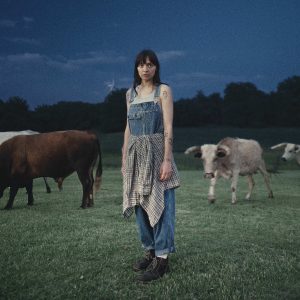
I’ve Got Nothing to Lose, and I’m Losing It was written by someone worn by the world but still not completely disenchanted. Morgan Nagler, a seasoned singer-songwriter now making her debut as a solo artist, sought to distill the wisdom she gained from the previous years of her life, marked by intense periods of grief, heartbreak, and loss. “The interesting thing about having very difficult experiences is that it really is the only opportunity you have to actually learn how strong you are,” she told Northern Transmissions in an interview ahead of her record’s release.
Nagler’s wordplay in this complex alt folk record encourages not only herself but her listeners to do the work to reframe their outlook on the world. The lyrics rarely distinguish melancholic feelings from the positive ones, offering spritely odes to psychedelics that carry the same wisdom and life lessons as ballads of heartbreak and grief. Even the punchy title works within this duality: in the eye of the beholder, this expression — blurted out firmly yet resigned toward the end of the album in “Another Mona Lisa” — could either be an angsty, exasperated realization that suffering is endless, or it could be a somewhat affirmation that a ‘rock bottom’ never exists. There’s always more to a person that holds them together, that lets them keep moving forward.
“That’s my great hope for the music,” she told us. “To offer some connection and keep that exchange open as we keep trying to move through.”
Ahead of the release of her debut record, Northern Transmissions sat down with Nagler for an open and honest conversation about her songwriting process, the story behind some standout tracks, and how she transformed grief and confusion into unwavering hope.
VB: Could you talk about putting the new album together, mainly the choices you decided to make with the production and the sound that you wanted to go with here? Because it goes in a couple directions with the lo-fi rock, acoustic folk, etc.
MN: I’ve spent the last handful of years — I think I’m coming up on about five years now — mostly focused on writing with other artists and for other artists. But I just write all the time; I write by myself every day. The songs started to amass, and the writing process for this became spread out because I wasn’t really focused on writing a record. I was just writing because it’s what I do. So, by the time I was like, “Oh, you know, I should put out a record again!” I kind of had so many songs. I brought them to Kyle Thomas, who produced the record, and also my manager Christian Stavros because he’s very creatively involved as well, and we listened to a bunch. There were a few that I knew I absolutely wanted on there, but I was curious to see what they would say as far as what songs to choose. Then it just came together!
As far as production goes, I’ve always been of this mind of letting the song dictate the production versus having a band sound that’s standard across the record. I’m sort of counting on my voice being both the literal and metaphorical “thread.” I think that people, music, and bands are complex, and there’s not just one tone to our existence. For example, I had a total fit last night because my amp stopped working, and…well, I feel like I’m normally pretty even and don’t have fits, but occasionally, there’s that side of you that comes out. So, there’s that song that might come out of you at some point that doesn’t necessarily fit with your normal, natural tone, but it’s still a part of you. So yeah, I did let the songs dictate whether they were acoustic, or rock, or whatever. Basically, I’m with Kyle, and we went into the studio to record the basics with Josh Adams and Gabe Noel on drums and bass respectively, which was great. We went into 64 Sound, which is the studio that belongs to Pierre de Reeder, who I’ve known since I was about 17 and is in Rilo Kiley. He engineered those sessions. Then we went back to Kyle’s home studio and slowly did the overdubs, crafting the sound of each song.
VB: Out of curiosity, what were the songs that you definitely fought for to be on the record? The ones that you believed in the most?
MN: My favorite song is “Hammer and Nail”, which is an acoustic song. I knew I really wanted “Orange Wine.” Historically, I’ve written just totally on my own, but since I’ve been co-writing with other artists, I thought, “You know, why not open it up a little bit?” So, some of the songs actually came from me bringing something to a friend. “Grassoline,” for example, came together because I had this idea, and I called Madi Diaz. It just sounded fun to knock this out in an hour!
The ones that I had finished on my own, I brought into Kyle with an open heart and mind as I totally trust his taste, which is rare and nice. For example, “Orange Wine” was a finished song when I brought it in — or a version of a finished song — and he said, “What if we write, like, five more choruses but with different lyrics?” So, if you noticed that it goes on and on and on, that was his idea, and we wrote those parts together.
“Cradle the Pain” wasn’t on my list at all, but that recording had something magical about it. Initially, when I just had the demo of it, I thought it was cool or whatever, but I wasn’t like, “This one has to be in there!” Sometimes you have to get an outside opinion and also just see what happens when you get in there with the band, you know? “Heartbreak City” was another one of my favorites, and that was an afterthought. I was in the studio already, so we just recorded it just one take to try it out. That’s why it sounds kind of fucked up but cool!
VB: How has the experience of writing for other people informed your own writing, and how have you seen the progression of your own writing style based on either writing for other people, writing alongside people, or having other people write with you?
MN: I came up in a very DIY indie rock that had a punk rock spirit when I first started playing music. I wouldn’t have dreamed of writing a song with somebody then; at the time, that seemed like inauthentic and cheating. I have obviously evolved a lot, and I’ve learned a lot. I think that there’s something to be said for a singular vision, absolutely; there are songs like that on the record. But it is also very interesting to combine minds, particularly if you trust and respect that person’s vibe. You are going to come up with something that you wouldn’t have on your own, and maybe that’s interesting. (Or maybe it’s not, but you don’t need to put it anywhere afterwards.) So, why wouldn’t you experiment? That’s where I’m at right now.
The first co-writing I ever did was with Gillian Welch and David Rawlings, and they’re very respected writers. I think they were drawn to me because I was so unschooled and very much…I literally used to call my writing style “the puke method,” where you just see what comes out and then never dare to change it. They had to be the ones to tell me, “Well, if you don’t like it…you can change it…You know that, right?” But I’d be like, “Nope, this is my song! I don’t really like this part, but it just is the song, and I’m not gonna fuck with that!” I think we had a yin-yang experience because they were drawing in my unschooled-ness, and they, in part, were my school. Working with them was like going to college. That has continued to develop as I work with other artists. You learn something every single day because everybody does it differently. Even if it’s not a good experience, you’re going to learn something, and you can’t help but absorb that. It then comes out in your work when you’re on your own.
VB: Speaking of lyrics, you’re a very visual lyricist, and there’s a lot of strong imagery that comes across in the record. I was wondering if you could get into some of your songs and the metaphors that you’ve come up with, especially the “divine hammer and nail,” which I found particularly evocative. I’d love to know more about coming up with that image and bringing it to life in this song.
MN: When I initially started writing it, I think I had the chorus going, “I’ve been dreaming of nothing in my way / Smooth sailing on a clear and sunny day / But everybody knows that a waveless sea is a fantasy / That’s why I’m just dreaming / Free dreaming / Dreaming of a log cabin building itself / When I already have the hammer and the nail.” I was messing around with it, and it stayed like that for a while, but I didn’t feel quite there yet. The reason why I thought of “divine hammer” is that it’s a Breeders song that’s amazing. Just the word “hammer” triggered the thought of a nail. It’s just my joy to play with words because I think that, in so many ways, language is insufficient. For example, the most common word “love” can mean so many different things, and even when it means the same thing, it means something different. Like, you can have romantic love with two different people, but you’re using that same word to describe a completely different feeling. I’m just interested in that and trying to actually invoke the very specific, unique feeling that you can’t actually get from the word itself. I think that’s why there’s so much abstract imagery that actually is building around one very specific feeling.
VB: To your point, in your music, when you’re trying to express these emotions that could mean so many different things, I thought that “Hammer and Nail” had a slightly nihilistic edge to it. I got stuck on the things that you’re dreaming about, which are just like … having a singular nice day. On one hand, it’s so simple and delightful, but on the other, I found myself a little sad because it’s such a bar-is-on-the-floor wish that’s seemingly so hard to obtain sometimes.
MN: Exactly! It seems so impossible, but again, it’s also the most accessible thing ever. Like, you think you can change your own mind, put yourself in that place of happiness, and not let things get to you, but it’s much easier said than done. In general, I know that things can feel heavy and sad lyrically on the album, but for me, at least there is the thread of hope and absolutely not giving up. Even the title of the album has that dual quality.
VB: “Grassoline,” which is this cute little folk song about weed, feels aligned with that attitude, at least in the same vein of finding happiness. Could you talk more about the placement of that song in the record, and what you wanted to do with it to address the hope at the heart of the record?
MN: As I was just saying, we do have the power on our own to have one good fucking day. We can just decide that we’re going to, and we can make that happen for ourselves. Even though it’s a literal song about weed, it’s also a metaphor about changing your perspective when you need to change it. It started off pretty simply: I was just leaving the house to go on a hike, and I stopped myself and joked, “You know what? I think I need some grass … oline!” I’m not sure if I made up the word, but it felt like I did, and I was like, “That’s a good song!”
It’s funny because like you said, it seems like a cute little folk song, and that’s how it is in my mind. To me, it’s the happy, fun song on the record. It’s about having hope, however you can get it. At a time where it feels like we have so little control over the big picture, there is something that we do have control over, and that is our own vibe. And it does make a difference. If it takes getting stoned before you go on your hike to experience beauty and therefore change the cells of your body that are affecting everything around you, then great. Do that if you want!
VB: Another one of the lyrics that really clicked with me, is in “Dad’s On Acid” where you say, “Don’t fall into the spiral.” It’s this beautiful, psychedelic, glistening track that’s both encouraging people to stay on track but also embrace the flow of change.
MN: That’s actually one of my favorite lyrics because the first time it comes around, I say, “I know, there’s nothing we can do about this spiral.” And then the second time it comes around, it goes, “I know you finally find your center in the spiral,” which is true. The spiral goes down to one singular point. To give a ridiculous example, earlier I said I threw a fit last night because my amps stopped working, and I’m not proud of that. I don’t want to act like a two-year-old ever. But it just happens sometimes! Then you actually learn from it, and yeah, you do find your center eventually and you’re okay.
VB: Another theme that I picked up on throughout the record is looking toward both the earth and space. Where do you find your inspiration in nature, either on earth, which has its complicated relationship with humans, or in space that’s so far away and seems unattainable but also so beautiful and untouched?
MN: Space is the great unknown. I think that space represents hope in its way because we don’t know what’s going on out there, really. And yes, it’s beautiful, and not knowing is also beautiful. It’s like the future unfolding in front of you, and even though you think you might have a good idea of what’s going to happen, you absolutely do not know what it holds. And it can change drastically at any moment. Looking to the sky is one side of the yin-yang, representing the unknown future and a possibility. Honestly, just the word “space” — like, outside of “outer space,” just actual space to breathe — it’s the same feeling you get when you look at the ocean and you’re just overwhelmed with this wide-open space.
The other side of the yin-yang is Earth and its complications. You feel every little beautiful thing, but you also know that you’re sometimes doing harm to it. It’s hard. To give a weird example, my friend has a toddler, and they have this potty in the back of the car for emergencies that needs a plastic bag for disposal. She’s amazing and super environmentally friendly, so she tried using those biodegradable bags, but they absolutely don’t work. The bag breaks 50% of the time. It sucks, but unfortunately, we might have to use real plastic just for this one application.
VB: Yeah, to me it’s like … Sometimes we just have to accept that we can’t be perfect about everything. I am eco-conscious, I separate my recyclables, but I also won’t lie. Plastic kind of really did a good job with the straws! Sorry to all the turtles out there.
MN: Yes! These are the applications that make sense, and there are plenty of other things that we don’t need to be plastic. Our relationship with the Earth isn’t perfect.
VB: I was wondering if you could get into the story of “Dad’s On Acid” — the images that you were trying to evoke and how you chose to build that song.
MN: The origin story is that I was at my friend’s house, and she lives in the little canyon, so there’s not good cell service. I had just ditched my phone, but at a certain point in the evening, I checked it, and there were ten missed calls from my mother. I, of course, completely panicked and called her back, and I was like, “Is everything okay?!” And she goes, “Yeah. Dad’s on acid.” My parents aren’t together, so it was even funnier. Just the way that she said it, though … Every emotion in the world was conveyed, but the disappointment also just kind of funny. Anyway, I had to leave my friend’s house and check on my dad, and thankfully he was totally fine. Everybody else lost their mind, though.
The song is obviously not the story of my dad literally being on acid. It’s more a realization that you have to persevere and move through every single situation. Both of my parents got very sick; they’re both doing well now, but they were very sick in the last handful of years. I think you’re most put to the test when something that close and part of your DNA gets compromised. It’s where I most felt that life is just going to keep throwing stuff at you, and you have to keep going. There really, there really isn’t another choice. You just have to just keep showing up and moving through, even though it’s a whirly psychedelic song, that is absolutely what it’s about. Again, there’s nothing you can do about the spiral. It’s going to happen, you’re going to freak out, you’re going to get caught up in whatever it wraps around you. But you have to endure and keep hope alive.
VB: Thank you for sharing that. That’s an unimaginably tough situation, but I’m glad that you all got through it. I’m happy that your parents are doing better now.
When it comes to finding your own way to cope with these difficult things, how, besides writing music, have you come to grounding yourself through all of it?
MN: The interesting thing about having very difficult experiences is that it really is the only opportunity you have to actually learn how strong you are. You can imagine yourself weak, or you can imagine yourself strong, but before you’re put in the position, you’re just imagining. You really don’t know how you’re going to show up in these tough moments. I think the more you go through these hardships, the more you are in touch with your strength and your perseverance. That is the thing to cultivate in order to remain grounded and try and stay present in this time of just terrible turmoil and distraction. It’s not an easy feat to stay present, but you can’t really experience true joy or true anything if you’re not actually present in the moment. I mean, as I’m saying this, my phone’s lights are going off incessantly, and I’m trying not to look at it. It really has to be a daily practice to stay present, and though I know people throw the phrase “Stay present!” around, but it’s the only way to have a real experience.
Songwriting is definitely my number one outlet. It does feel like therapy to put some melodies and words to emotions so that they can exist outside of your body and you don’t need to hold on to them anymore. Being in nature is the best cheat code to finding presence because I think you just can’t help it if you’re just, you know, staring at a tree. You’re just standing there existing.
VB: To conclude, is there anything else about the record that you feel like we didn’t cover, or if you’re looking forward to your debut and the live performances following it?
MN: Especially after not pursuing my own artist thing for a long time, the record was just a very cathartic offering to the ether. Connecting to each other is just the most important thing right now because, the news itself mixed with computers, and AI, and the phones, and everything, is unbelievably isolating. That’s just not what life’s about. So, I’m really enjoying playing shows again because that’s such a great way to communicate with people that you don’t know already. That’s my great hope for the music: to offer some connection and keep that exchange open as we keep trying to move through.
Latest Reviews


Trending
Tracks
Related


Advertisement
Join the Northern Transmissions insiders list
Sign up for reviews, interviews, news, videos, playlists — and more.