Kathleen Edwards wants everyone to become a billionaire—whatever that means for them
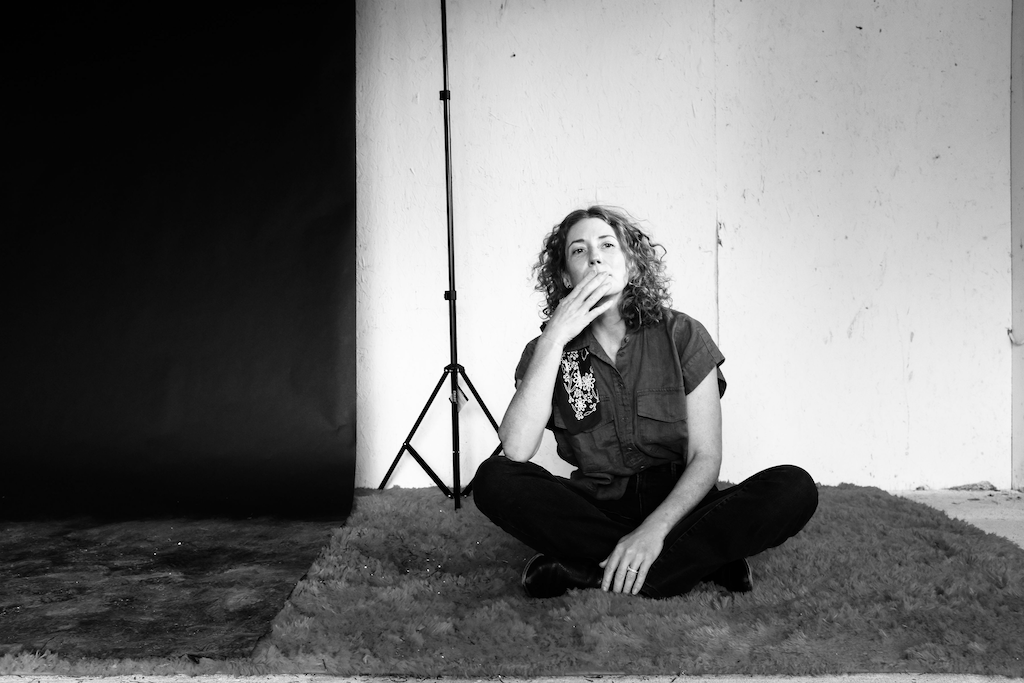
Canadian singer-songwriter Kathleen Edwards has returned with her brand new album Billionaire, marking her long-awaited return to recording. The record is self assured, witty, and filled with reflection. The album was released on August 22nd via Dualtone.
Edwards spoke to Northern Transmissions via Zoom about writing and recording the album in Nashville with producers Jason Isbell and Gena Johnson, running a business after she ‘quit’ music in 2013, her relationship to hockey, and the catharsis of rumination.
NT: I’ve been listening to Billionaire all morning. It’s been out for five days now! How are you feeling about that?
KE: I’ve been feeling, great, I mean amazing- I always joke that you know you finish a project, you press stop record and all you want to do is just put it out the next day-so sitting on something for six months, five months, it’s such a challenging time where you spend so much of your creative time and money and energy on a project and then to have to kind of let it just exist in the sort of in between world. It’s hard because you want people to hear it— but anyway— so the fact that it’s out is great. You know the music business is a strange creature— I don’t feel like I necessarily understand any of it, and the best part about music is just recording music with people and then playing, and that’s the validating part.
NT: Oh totally. Is the release date an exhale? Are you kind of still hanging on to the perception of the record, or is it a relieving time?
KE: Well, I mean one thing I will say is that I feel very good about the record—I’ve always felt proud of my work— like, you know bad reviews happen and feedback is inevitable, and the fact is I just know it’s a really good record and I’m excited for people to hear it and love it and all the other stuff is just sort of inconsequential— it happens, it doesn’t really matter, I’m not gonna stop doing this because someone didn’t like the record and wrote about it *shrugs*—
—so yeah, it’s nice to be out in the world. One of the things that’s really nice is Billionaire the album was named after a song on the record that is about a young woman who I was very close to who passed away, and I gave her parents the first copy of the record a month and a half ago, so they would have a copy of it, and I spend time with them when I am able to see them. So that part feels like there’s a purpose. A little bit of some of the hard, some of the really tough stuff emotionally, and all the vulnerability that went into doing that feels like it’s going to a good group of people, and it’s nice to honor somebody that you love, and I care a lot about that song, so it being out in the world feels like she’s having— that she’s alive in the song and when people hear it they hear about her and that part’s very meaningful.
NT: It’s such a beautiful tribute. I saw another journalist speaking with you say that it sort of feels like you changed the association with the word billionaire, and I just loved that because you were right in saying that it’s a bit of a dirty word. Now there’s this beautiful song that entirely alters the meaning.
KE: Life is to be lived to the fullest when possible, and it’s not always— there are so many things in life that are challenging and feel like setbacks that, to sort of accept what the worlds gifts are and enjoy them and if that for you is different than it is for me, you know, all I simply want is for other people to enjoy their lives as they see fit, and so you know the billionaire thing is like, yeah we should all be fuckin’ billionaires in life, and whatever that looks like to you— good for you.
NT: I love that. I’d like to hear a little bit about where the album was recorded, and how that physical space informs the songwriting.
KE: Well, it was made at an incredibly, highly esteemed recording studio in Nashville Tennessee called Sound Emporium. Sound Emporium has been around since I believe the fifties, and it is absolutely a favourite of many recording artists, producers, and engineers in the city. Obviously back in the day, you know, labels had their own recording studios- they had their own studios that a lot of their artists would work at, and you know with the way that the way the music industry has changed so many people have moved to home studios, and there remains a few very excellent recording studios in the country and one of them is Sound Emporium. It was chosen by Jason Isabell, and I had worked there once when I sang on a song for a Maren Morris record, hilariously, and you know recording studios are like these larger than life sort of like fable places, and then you go into them and you’re like oh it’s just a place with a kitchen, a bathroom, and then you know some hardwood flooring and a lot of like really nice recording equipment and microphones, so that’s sort of Sound Emporium, it’s a beautiful room and everyone works there, you see it in a thousand backdrops for different projects. I saw T Bone Burnett when I was there in one of the other studios, and I’d come out of the studio where we were working and I could hear another sonic sort of landscape, and I came out and I heard this beautiful sound and I was like “Oh whoever is in there that’s my people” and I peeked my head over and was like “Oh my god that’s fucking T Bone Burnett!”
NT: Oh so cool. I’ve read a little bit about what’s referred to as your ‘musical hiatus’ between 2012 and 2020, and I’m wondering in these times when you’re not releasing music to the public what your relationship to it is— are you someone that plays all the time casually? Do you write casually, is that something that happens in what appears as those ‘off times’ to your listeners?
KE: Not really, in 2013 when I really consciously said “I think I’m quitting”, I really had no interest in music and I opened a coffee shop, and the great thing about opening a business and throwing myself into that was that I really couldn’t even think about music and I didn’t even want to, but it was a wonderful change in my day to day life and my priorities. Then you know in 2020 I had put out this record and it was obviously an incredibly unique time, and everyone went home and I know some people in the creative field were very productive. I was not, I had a business to try and figure out how we were gonna survive being opened and closed and opened and closed. So the one thing I really do think that’s a gift is that my whole life leading up to when I quit, I was always thinking about music, my career, album art, what was next for me, what tour I was gonna do, and it was a very sort of— I mean it wasn’t one dimensional, but in some ways it was very one dimensional— I lived in this one little bubble, and my life I just think like any artists we are— you know art is a reflection, it’s a mirror of what we are seeing in the world–and if you aren’t living your life outside of a tour van, or a gig, or a recording studio you know what do you have to write about? So having a life outside of art, like so many people have said to me “You take these long breaks between albums” —well, first of all, I don’t—I fucking tour for two years which is wonderful and I love doing it but your life is on hold, and then you go home and you sort of have to figure out how to reintegrate into your family and your home and then you have to figure out what the world looks like and what are you gonna work on and that takes time and all the sort of bullshit of having to feed the algorithim to stay visible, I mean that’s just a reality of that format, but I very happily don’t feel obligated to participate in it.
NT: Yeah. So the songs for you come out after the decision of wanting to write? They don’t accumulate over the years and then you revisit them?
KE: No it’s funny, I really find that the sort of time, like when I finished touring Total Freedom let’s just say 2023, I was really hungry to write new material, I had toured for a few years, I had done a lot of my back catalogue, I had sort of reintroduced myself to a lot of places I hadn’t been in ten years and it was really lovely to do that and it felt incredible to go to places and play songs that were ten, fifteen years old, some of them, you know “Failer”’s twenty years old, and to have people you know, smile when you play a song that’s from your distant past and feel like oh it still means something to someone, that was lovely, but when 2023 rolled around I was really ready to work on new songs and as such, I really found myself in what I would call a writing bubble and I think that’s probably true for writers of all kinds, that you go into a sort of den, and I was in my little writing den for probably six, seven months and I was very prolific in that time and it was a really wonderful, agonizing, cathartic window where I was writing songs, reliving and processing what the last five years had been like and it’s nice to live in that. I think it made me a better writer, to live in it for a while rather than just sort of grasp at straws a little bit.
NT: Yeah- is there a track on the record that you recall as coming more naturally than all the rest? One that kind of poured out of you the most?
KE: Yeah, for sure “Little Pink Door” was a song that I wrote, I would say it took me maybe 30 or 40 minutes to write it, and it just sort of showed up out of the blue— I had woken up and taken my dogs to a usual little park that I take them to, and on my drive there I pass this house every day and it’s so charming and pretty and on the way back I just thought to myself- it was a little white cottage with a pink door and I just had this lyric pop into my head ‘little pink door’ and then by the time I got home I’d imagined that there would be this song about that place, that’s not a place I lived, but a story that was true of me and a scene in my life kind of just emerged, and I wrote it down and I played it and recorded it on my voice memo, and it took maybe 30 40 minutes and that was it, and yeah it just stayed there until my last day in the studio when we recorded it.
NT: I read that “Little Pink Door” was sort of a live one take- what is it about a song that warrants that approach instead of tracking?
KE: Hmm, well the whole record that I just made, and almost all my records- well this one specifically– the drums and the bass and the electric guitars were mostly all done live off the floor and sometimes you’ll do three or four passes of a song, and the drummer will say “Oh I wanna take that again- I flubbed the bridge” or the bass player says “I’d just like to fix a few notes” and so you go back, but the pass remains the sort of live off the floor thing. And so “Little Pink Door” wasn’t really any different, it’s just that every time I had sat in front of a microphone by myself to record a version of it, that you know in theory someone would add something to- I just couldn’t get it, it was really frustrating and I had this audio, this voice memo on my phone, that I just kept thinking I just wanna capture the magic of when I had first written it and it was just there and it was effortless, so Gena the producer was like “Lets just put you and Jason and Jen on keyboards, lets just sit you all down” and so then we just played it once, and I think what’s unique about that pass is my guitar and my vocals are all just live off the floor one pass, with the guitars and the keyboards– a lot of the time you redo your vocal parts, so it was just this charming moment, and I’ve done songs like that over the years on my records–like a lot of acoustic songs like “Scared At Night”, “Sure as Shit”– I remember doing those all as single pass, one go live. So you know it seems normal to me, but I realize these days it’s actually not normal at all, people cut and paste syllables you know, *shrugs* that’s just not really that interesting to me.
NT: Yeah, fair enough. You’ve got some hockey reference on “Little Red Ranger.” I’d love to know the significance of hockey for you growing up, and where you stand with the Leafs now?
KE: *Laughs* Well we’ll see if I’ll be invited, maybe if they win the cup I’ll be invited cause it’ll be like “We showed you!” But hockey has actually been a funny thing in my career, because one of my first songs I ever wrote was called “Hockey Skates” and one of the first things I ever got asked to do when my first record was still sort of a demo, I hadn’t been signed to a deal yet, was this song “Hockey Skates” and Jim Cuddy from Blue Rodeo invited me to come do something in Toronto, and we were gonna play “Hockey Skates” and it was relayed to me that he loved the song, because he loved the way I said ‘haw-key skates’, and I was like “Ok, well whatever”, and as fate would have it, Jim and Blue Rodeo played a huge role in taking me under their wing for many years as an opening act, and Jim’s guitar player ended up becoming my husband—Colin Cripps—and so they played a huge role and that was always sort of the origin story was “Hockey Skates” and the truth is, I put hockey in my songs, here and there because for me its something I didn’t grow up doing. I was a foreign service kid, I played classical violin, I wasn’t in sports really. And when I became a young woman living on my own, all the musician dudes who I wanted to be friends with all played hockey together, like pick up hockey— it’s a part of many Canadian boys lives, and I always felt a little bit like the tom-girl who just wanted to fit in, and hockey was the thing that I just had no experience doing. So I kind of hold it in this sort of pedestal, nostalgia thing and “Little Red Ranger” is about this boy who grows up to be a man and his childhood is filled with going to the rink and in his adult life he still roots for the Leafs, and hockey is sort of a permanent fixture in his life no matter where he goes, and I just sort of think that’s wonderfully romantic in a way, and culturally relevant.
NT: Yeah, I love that track. I love a perfect blend of a universal sentiment and then it still has those personal touches that are only true to you. I have a question about the song “Need A Ride”—Can you picture a sort of last straw moment that sparked the light for that, or if it was kind of an accumulation.
KE: *Laughs* The last straw- like ‘dammit I’m finally gonna tell that person off’- well look I mean the first interview I did, someone was like “Well that song is obviously about social media”, and I was like “Yeah no, you’re right”— I didn’t see it as that sort of thinly veiled, but really it’s about the way that we have kind of gotten into this collectivism, and seeing things as only black and white. Really for me it was rooted in people pointing fingers and righteously offering sermons to people about how they should live their lives.
NT: As someone who loves to ruminate, my favourite track on the record is “Pine,” and I would love to hear a little bit about the origin of that song.
KE: Ruminating is very cathartic. I ruminate doing 3 activities: jigsaw puzzles, stacking firewood, and gardening. The rumination that became Pine was that feeling— I have a lot of lovely people in my life that I go through a lot of intense things with. It was a line that popped into my head: “When we go our separate ways, the thought of you stays.” For the first few days that I come home from tour, I miss my band, I miss the inside jokes, I miss the secret language that we form. It’s like going to summer camp and having to go home at the end. I’m 47 and I still feel like I have these teenage-like connections with my friends, and I’m so fucking thankful.
NT: At what point in the creation of that song did you know it would close the record?
KE: I had no idea. It was the last day we were in the studio, and Gena suggested the vocal arrangement, and I just realized what a beautiful way to close the record. Like, oh it’s the end but hopefully you’re still thinking about it in a few minutes.
NT: I’ll end on this. Your debut album came out in 2003. I’m wondering what it feels like to look back at all of these solid recordings of these different versions of yourself, and how that informs what you make now, and where you’re heading.
KE: Sometimes it’s daunting, and sometimes it’s such a relief. I was just 23 when Failer came out. And I played on Letterman and Leno and I toured, and all of these crazy things. I look back and go “holy fuck you were thrown into the deep end, without a fucking dingey or a fucking life vest.” And I chose to swim, and I was a bad swimmer. But when I look back I think “good for you.” It takes guts. I just didn’t want to fuck up. I had so much armour in those years because I didn’t realize I could be proud of the work even if someone didn’t like it. I was so fortunate that people championed me early on, many of those people are not part of my career anymore. I think as you get older you give yourself more credit for all of the things you were able to get through. Now I feel like I know what roads I do and don’t want to walk down anymore.
Order Billionaire by Kathleen Edwards HERE
Latest Reviews


Tracks
Advertisement
Join the Northern Transmissions insiders list
Sign up for reviews, interviews, news, videos, playlists — and more.